Did you know that parks and trails can provide significant benefits to our health, not justphysically, but also mentally and socially?
Of course, parks are a great resource to improve your physical health. Despite this, many doctors who recommend that US adults should be physically active for at least 30 minutes a day to reduce their risk for chronic disease or a premature death, are disappointed to see that only about 25% of us actually are.1 This is caused by the adoption of sedentary lifestyles as we spend the majority of our day sitting at desks, in cars, or on couches (or at least around 75% of us do). In a time where people aren’t as encouraged to get outside and move as we traditionally have been, people without access to places like parks can have a serious lack of healthy levels of exercise.
As jobs have shifted from manual to digital labor, our bodies have not kept up with the shift in technology, leading to phrases like “sitting is the new smoking” becoming popular. For this reason, it is important for people to get out and put their local parks to good use to avoid health risks. Plus, getting out can improve your health just as much as a sedentary lifestyle can threaten it. Being exposed to natural environments, such as parks and trails, can lead to increased immune system function and stronger responses to harmful diseases. Your body does this through the increased production of special white blood cells called natural killer cells that form the first line of defense against cancers and infection.2 By encouraging physical activity, the further development of easily accessible trails and parks is crucial to public health.
Another benefit to these trails is the positive mental health effects brought out by being in nature. Time spent outdoors, especially in green spaces, leads to fewer sleepless nights from reduced stress.3 This reduced stress can help people live more relaxed lifestyles, providing serious benefits to people who frequent parks, especially those who have trouble sleeping or relaxing. Other studies show that exposure to nature can also reduce anxiety, depression, and stress through decreasing blood pressure and cortisol levels, leading to better mental health.4 By having a lower risk of mental health issues, park-goers can have the peace of mind to focus on the things that matter to them like their family, career, and hobbies more than people at risk.
Not only can nature exposure reduce stress, but also improve functions like attention and memory.5 This can be especially beneficial for the older community as their mental processes wear down. Easy access to trails could help them improve their mental state and give them more time with loved ones as they age compared to their peers.
Additionally, researchers found that children who have frequent interactions with natural environments show similar results, with greater benefits seen with unstructured areas like forests rather than man-made natural spaces like urban parks.6 Using this distinction between urban parks and natural ones, we can see that access to trails in forests is more beneficial than some other forms of green space exposure for children. This point shows the importance of parents having easy access to natural parks and trails without having to bend over backwards for their kids to have contact with the natural world. These interactions create a healthy environment for children to grow and experience nature both frequently and safely as they develop into members of the community.
People of all ages can appreciate the values a park visit can bring to their lives, showing that everyone can benefit from trail use in some way.
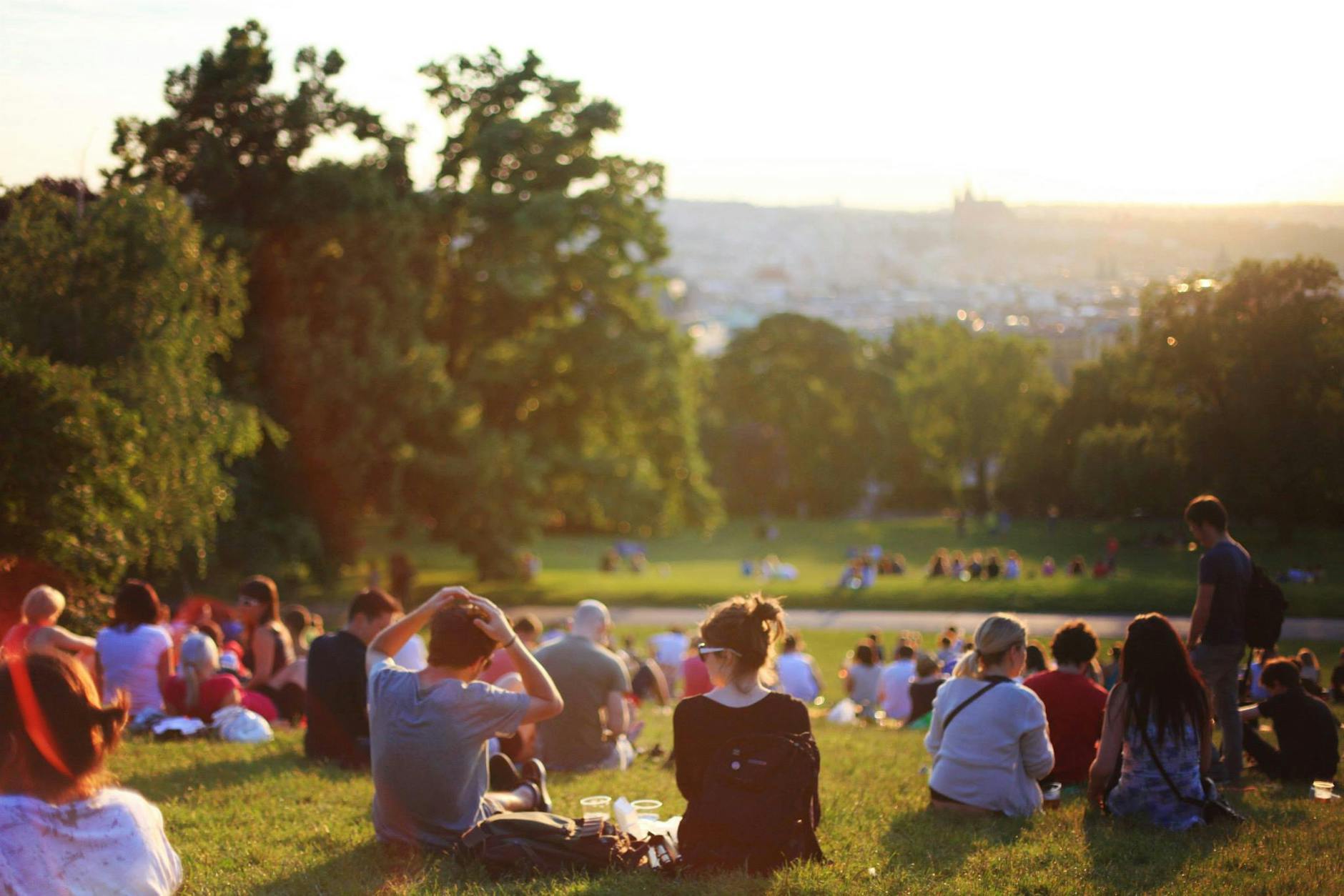
An often overlooked part of parks is their social aspect. Humans are social creatures, so even simple interactions like those found in green spaces make the difference between a residential area and a community. A study on Chicago parks shows that being in the presence of trees and other plants fosters community engagement and safety, as well as increases time spent outdoors.7 This shows that the simple presence of nature encourages interactions that create strong social ties and reduce feelings of isolation in communities. By providing spaces for nature to thrive, parks facilitate social cohesion and give people a feeling of belonging, which are some of the best determinants of mental health.8 Through this, green spaces foster connection and create healthy tight-knit communities that we can rely on where otherwise there may not be.
It is because of these many social, mental, and physical benefits that trails are so important; they give people the opportunity to go out and experience the natural world away from the stress and anxiety of daily life to improve their health. Try it for yourself, you may be surprised!
Fenton, Mark. “Battling America’s Epidemic of Physical Inactivity: Building More Walkable, Livable Communities.” Journal of Nutrition Education and Behavior, vol. 37, Supplement 2, 2005, pp. S115–S120. https://doi.org/10.1016/s1499-4046(06)60211-x. Accessed 16 June 2025.
Li, Q., et al. “Visiting a Forest, but Not a City, Increases Human Natural Killer Activity and Expression of Anti-Cancer Proteins.” International Journal of Immunopathology and Pharmacology, vol. 21, no. 1, 2008, pp. 117–127. https://doi.org/10.1177/039463200802100113. Accessed 16 June 2025.
Triguero-Mas, Margarita, et al. “Natural Outdoor Environments and Mental Health: Stress as a Possible Mechanism.” Environmental Research, vol. 159, 2017, pp. 629–638. https://doi.org/10.1016/j.envres.2017.08.048. Accessed 16 June 2025.
Jimenez, Maria P., et al. “Associations between Nature Exposure and Health: A Review of the Evidence.” International Journal of Environmental Research and Public Health, vol. 18, no. 9, 30 Apr. 2021, https://doi.org/10.3390/ijerph18094790. Accessed 16 June 2025.
Berman, Marc G., et al. “The Cognitive Benefits of Interacting with Nature.” Psychological Science, vol. 19, no. 12, 2008, pp. 1207–1212. https://doi.org/10.1111/j.1467-9280.2008.02225.x. Accessed 16 June 2025.
Liu, J., and R. J. Green. “The Effect of Exposure to Nature on Children’s Psychological Well-Being: A Systematic Review of the Literature.” Urban Forestry and Urban Greening, vol. 81, 2023, https://doi.org/10.1016/j.ufug.2023.127846. Accessed 16 June 2025.
Kawachi, Ichiro, and Lisa F. Berkman. “Social Ties and Mental Health.” Journal of Urban Health: Bulletin of the New York Academy of Medicine, vol. 78, no. 3, 2001, pp. 458–467. https://doi.org/10.1093/jurban/78.3.458. Accessed 16 June 2025.




 Virginia Beach Trails
Leave a comment